What Our Middle Schoolers Learned by Working on a Real Artemis Challenge
Last night, Artemis II landed safely, and it was inspiring to watch. My wife, kids, parents, mother-in-law, and I gathered around the TV as the spacecraft splashed down in the Pacific. NASA had just completed a 694,481-mile mission and brought human beings back to the Moon’s vicinity for the first time in more than 50 years. The boomer moms in our living room raved, cried, and recalled their own childhoods. I felt so happy my kids saw it all.
Though this wasn't the lunar landing mission yet, still it felt enormously significant. It seemed to be yet another live test of whether we can send humans back into deep space well and bring them home safely. Massive congratulations to the NASA team, the Artemis II crew, and everyone whose work made that success possible.
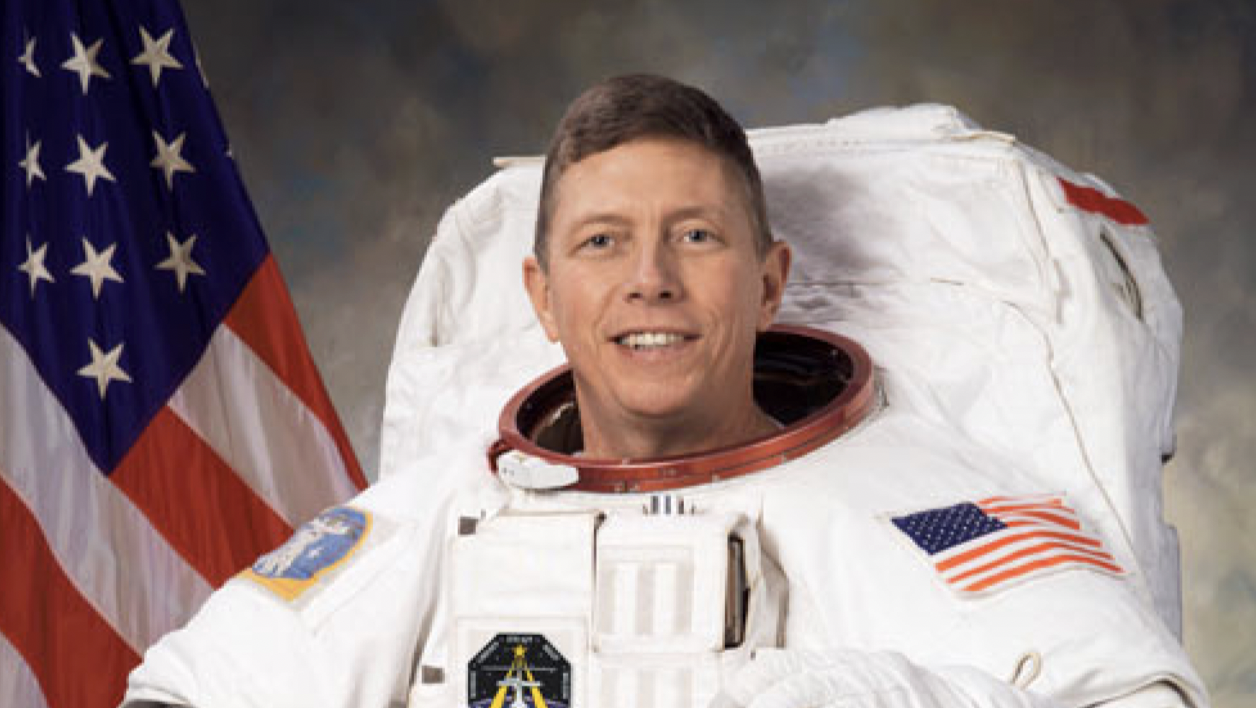
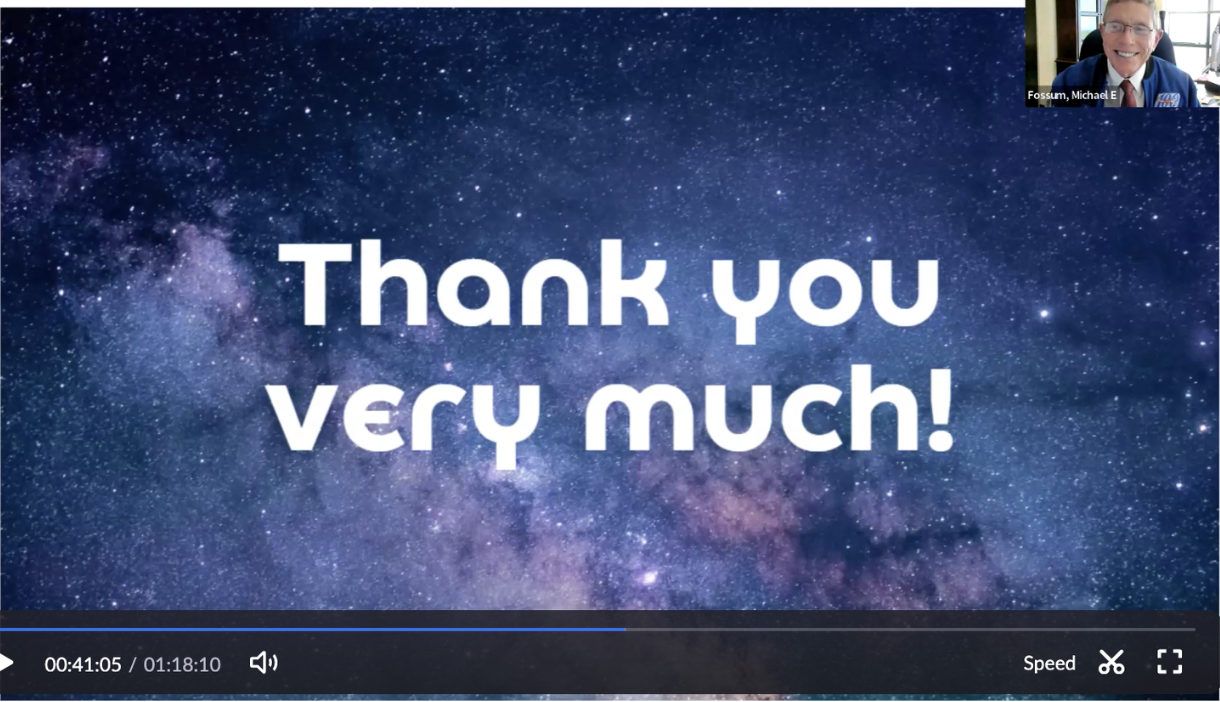
Last night’s landing also reminded me that, two years ago, our learners at The Forest School: An Acton Academy got to work on challenges connected to this larger effort. In March of 2024, our middle school heroes (our term for students) took on an Astro Engineering Quest tied to NASA’s Artemis IV work. They researched and prototyped for weeks and ultimately presented their thinking to former NASA astronaut Michael Fossum. Colonel Fossum wasn't just someone who had once been to space; he's remained deeply connected to the work Artemis now represents.
After his final mission in 2011, Fossum served in senior leadership roles at NASA and, in his own words, spent those years “working with rookie crew members helping them prepare for the next successful mission.” He retired from NASA in 2017. Today he serves as vice president, chief operating officer of Texas A&M University at Galveston, and superintendent of the Texas A&M Maritime Academy.
As Artemis II unfolded, Fossum served as a mentor to multiple present day astronauts and was still helping the public understand why the mission mattered. Recently on CNN, he discussed the years of preparation behind the lunar flyby and why Artemis II was a crucial step toward returning to the Moon for more than a brief visit. On Fox News, he explained what made Artemis II’s reentry profile unique and what that experience would feel like for the crew.
So when our middle schoolers presented to Michael Fossum, they were not presenting to someone loosely connected to the story. They were presenting to someone whose life, leadership, and ongoing work still sat close to the very questions Artemis raises. That gave the moment a seriousness our heroes could feel.
The Quest
The challenge we gave our middle schoolers was simple to say and hard to solve: human beings had only stayed on the Moon for a little more than three days. Their challenge was to extend that to two weeks, the length of one lunar day.
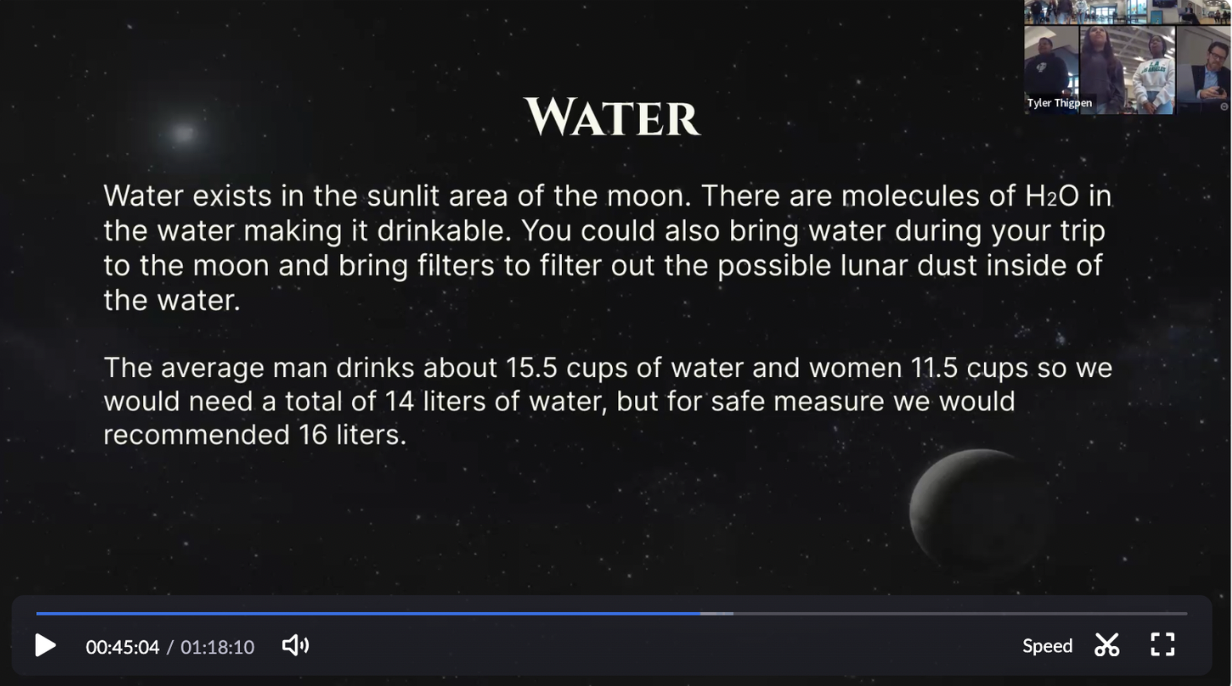
They had to design a real plan. They had to think through water. They had to grapple with extreme temperatures and how life-support systems would keep running through punishing lunar conditions. They had to address radiation. They had to determine how food would work in an environment where growing it would be impractical. They had to decide where to land, how to explore, what vehicle to use, and what to collect and bring back to Earth.
Then they had to present their plan in four minutes to Colonel Fossum. After that, he questioned them, challenged their assumptions, and gave live feedback. A winning team was chosen based on sustainability in a hostile environment, innovation and practicality, and contribution to exploration and science. I'm grateful to teammates Lana Toler, Trey Lackey, and Amber Bryant who designed the Quest and guided learners throughout.
Importantly, the assignment for our learners was not “let's learn about the Moon." Rather, the assignment was more like a game or challenge. It asked for judgment, synthesis, tradeoffs, communication, teamwork, and courage. It asked learners not just to know things, but to use knowledge in service of a real problem.
Not school about the world, but work in the world
This is one of the biggest distinctions my team, parents, and I care about in education. Too often, school gives students tasks that are too schoolish. They complete them because an adult assigned them. The audience is the teacher. The point is the grade. The work dies on the desk.
But it doesn't have to be this way.
The audience for learner work can be real. The constraints can be real. The feedback can be real. The problem can be real enough that learners have to think like people in the field, not like children trying to guess what answer a teacher wants.
And that changes learners and families.
When young people know their ideas will be examined by someone who is actually doing the work, they prepare differently. When they know weak thinking will be exposed, they revise. When they know the problem itself matters, they care more. They become more focused, more serious, and often more capable than adults expect.
Self-directed learning isn't children doing whatever they want. It is learners, in the context of an interdependent community of peers, trained educators, and caring adults, increasingly taking charge of process, pathways, and outcomes with guidance, accountability, and support from others. And for the sake of helping others.
The adult move that matters most
If I had to name one adult move that matters here, it is this: build strong conditions, then get out of the way enough for students to do real work. That doesn't mean adults become passive. It doesn't mean we abandon children to chaos. It means we stop over-explaining, over-directing, and over-rescuing. It means we design worthy challenges, create clear expectations, bring in real audiences, surround learners with support, and let them think, try, struggle, revise, and own what they produce.
In most schools, students spend years following rules they did not make and listening to explanations of questions they did not ask. Over time, that design tends to produce dependent learners rather than independent ones. Both our landscape work and our book have argued that the long-term design of schooling often rewards compliance over agency, even though the world now needs problem solvers, initiators, and self-directed learners.
The problem is not that young people are inherently passive. The problem is that many of the environments we put them in give them too little practice being active.
What parents, educators, and school leaders can take from this
For parents, this is a reminder that children often grow most when they're entrusted with meaningful responsibility. They need protection, explanation, and correction. They also need challenge, trust, and the chance to be taken seriously.
For educators, it is a reminder that rigor isn't the same thing as control. Sometimes the more rigorous move isn't to tell students more. It is to ask more of them. It is to put them in front of a real problem, provide thoughtful support, and let them do the intellectual heavy lifting.
For school leaders, it is a reminder that the central question isn't whether students can handle more ownership. The better question is whether we are willing to redesign enough of school for them to practice it. That includes the kinds of challenges we assign, the audiences we bring in, the way we use time, the role we expect adults to play, and the degree to which student work has actual purpose beyond compliance.
What I saw
What I saw in that Astro Engineering Quest was not a cute enrichment activity. I saw middle schoolers rise to the level of the work. I saw them stretch because the task demanded it. I saw them care because the situation was real. I saw them become more thoughtful because somebody credible was going to listen.
You can watch our middle schooler's original presentation here if interested, passcode: N*.R6^**
Through that experience—and through last night's landing—I was reminded again that one of the most loving things adults can do is refuse to make school smaller than students are capable of.
A final congratulations, and a challenge to schools
So again, congratulations to NASA, to the Artemis II crew, and to all those who made this mission possible. Artemis II was a victory for engineering, discipline, teamwork, and courage. It was also, whether NASA intended it this way or not, a gift to schools. It gave us a living example of the kind of work that can pull young people upward.
The future will not be built by graduates who only know how to wait for instructions. It will be built by people who can think clearly, work with others, wrestle with ambiguity, recover from setbacks, and contribute before they feel fully ready.
Not school about the world, but work in the world
This is one of the biggest distinctions my team, parents, and I care about in education. Too often, school gives students tasks that are too schoolish. They complete them because an adult assigned them. The audience is the teacher. The point is the grade. The work dies on the desk.
But it doesn't have to be this way.
The audience for learner work can be real. The constraints can be real. The feedback can be real. The problem can be real enough that learners have to think like people in the field, not like children trying to guess what answer a teacher wants.
And that changes learners and families.
When young people know their ideas will be examined by someone who is actually doing the work, they prepare differently. When they know weak thinking will be exposed, they revise. When they know the problem itself matters, they care more. They become more focused, more serious, and often more capable than adults expect.
Self-directed learning isn't children doing whatever they want. It is learners, in the context of an interdependent community of peers, trained educators, and caring adults, increasingly taking charge of process, pathways, and outcomes with guidance, accountability, and support from others. And for the sake of helping others.
The adult move that matters most
If I had to name one adult move that matters here, it is this: build strong conditions, then get out of the way enough for students to do real work. That doesn't mean adults become passive. It doesn't mean we abandon children to chaos. It means we stop over-explaining, over-directing, and over-rescuing. It means we design worthy challenges, create clear expectations, bring in real audiences, surround learners with support, and let them think, try, struggle, revise, and own what they produce.
In most schools, students spend years following rules they did not make and listening to explanations of questions they did not ask. Over time, that design tends to produce dependent learners rather than independent ones. Both our landscape work and our book have argued that the long-term design of schooling often rewards compliance over agency, even though the world now needs problem solvers, initiators, and self-directed learners.
The problem is not that young people are inherently passive. The problem is that many of the environments we put them in give them too little practice being active.
What parents, educators, and school leaders can take from this
For parents, this is a reminder that children often grow most when they're entrusted with meaningful responsibility. They need protection, explanation, and correction. They also need challenge, trust, and the chance to be taken seriously.
For educators, it is a reminder that rigor isn't the same thing as control. Sometimes the more rigorous move isn't to tell students more. It is to ask more of them. It is to put them in front of a real problem, provide thoughtful support, and let them do the intellectual heavy lifting.
For school leaders, it is a reminder that the central question isn't whether students can handle more ownership. The better question is whether we are willing to redesign enough of school for them to practice it. That includes the kinds of challenges we assign, the audiences we bring in, the way we use time, the role we expect adults to play, and the degree to which student work has actual purpose beyond compliance.
What I saw
What I saw in that Astro Engineering Quest was not a cute enrichment activity. I saw middle schoolers rise to the level of the work. I saw them stretch because the task demanded it. I saw them care because the situation was real. I saw them become more thoughtful because somebody credible was going to listen.
You can watch our middle schooler's original presentation here if interested, passcode: N*.R6^**
Through that experience—and through last night's landing—I was reminded again that one of the most loving things adults can do is refuse to make school smaller than students are capable of.
A final congratulations, and a challenge to schools
So again, congratulations to NASA, to the Artemis II crew, and to all those who made this mission possible. Artemis II was a victory for engineering, discipline, teamwork, and courage. It was also, whether NASA intended it this way or not, a gift to schools. It gave us a living example of the kind of work that can pull young people upward.
The future will not be built by graduates who only know how to wait for instructions. It will be built by people who can think clearly, work with others, wrestle with ambiguity, recover from setbacks, and contribute before they feel fully ready.
Schools should give students practice becoming those people now.