What We’re Doing in the First Weeks of School—and Why
by Tyler Thigpen
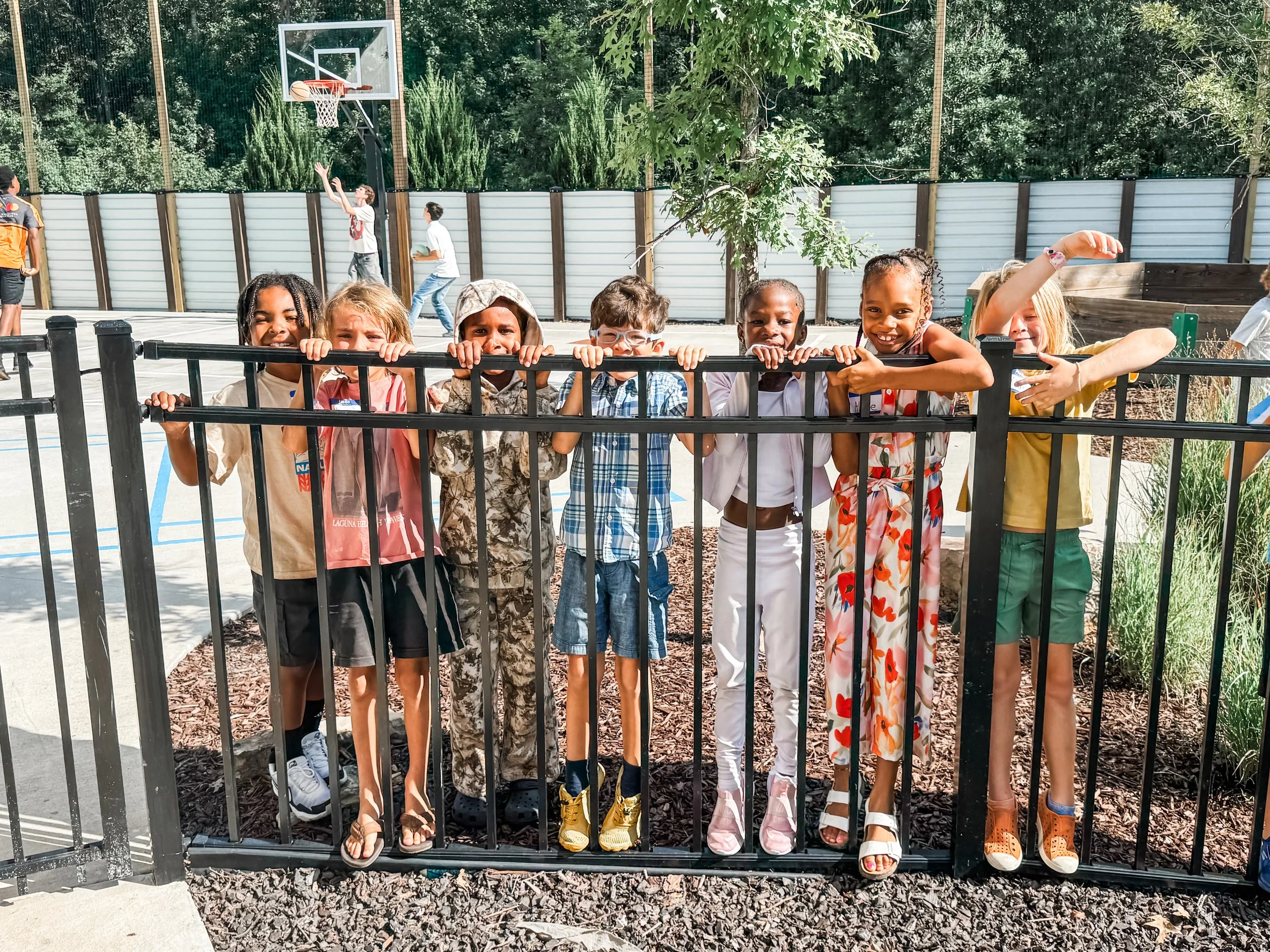
Imagine your hero starting each school day at Forest with a growing sense of ownership. They know what they’re working toward, make plans, locate resources, ask for help, and take action without waiting for an adult to direct every next step. When something goes wrong, they learn to reflect, repair, adjust, and try again.
That’s the kind of learner—and person—we are working to develop at Forest.
We don’t expect your hero to arrive already knowing how to manage their time, set effective goals, resolve conflict, persist through difficulty, or contribute responsibly to a community. Learning to Be, Do, Learn, and Live Together aren’t things children either possess or lack. They’re a set of capacities that can be taught, practiced, strengthened, and eventually owned.
That’s why the opening weeks of school matter so much.
In many conventional classrooms in our nation, the first weeks are devoted primarily to the teacher explaining the rules, assigning seats, establishing procedures, directing each activity, and showing students how to earn the teacher’s approval. These practices may create quick order, but they can also teach children to rely almost entirely on adults to organize their behavior, motivation, and learning.
We’re starting differently! In what follows, I share 8 things we’re doing with heroes early this session.
We are starting with clear boundaries
“Learner-centered” or “Learner-driven” or “Self-directed” doesn’t mean that children are free to do anything they want. We adults are still responsible for the non-negotiables of safety, respect, responsibility, academic integrity, and every learner’s right to learn. Our heroes need to know that freedom exists inside a community and that one person’s choices cannot diminish the safety, dignity, or opportunities of others.
Within those boundaries, however, heroes will have genuine opportunities to make decisions and shape their experience. Clear boundaries help children feel secure, while meaningful freedom gives them practice using judgment. Children need both.
Learners are co-creating their studio culture
Each Studio is spending time developing a Contract of Promises for how they treat one another, and also Rules of Engagement for how they handle their Socratic discussions. Rather than merely receiving a list of rules written by adults, heroes are discussing the kind of community they want to create and the promises required to make that community possible. They’re considering questions like: How should we treat one another? What does excellent work look like? How should we respond when someone is distracted or unkind? What do we owe one another when we make a mistake? Even our Sparkers!
This process helps heroes understand that culture isn’t something adults impose on them. It is something they help create, protect, and repair. When children have genuine authorship, they are way more likely to feel responsibility for what happens next.
We are building relationships before conflict arrives
The opening weeks also include significant time for learners and Guides to know one another, have fun, and build team. They’re learning names, stories, strengths, interests, needs, working preferences, and aspirations. Studios are creating shared experiences, rituals, games, discussions, and joyful moments that build trust.
This relational work isn’t separate from learning. Heroes are much more likely to receive feedback, admit mistakes, ask for help, take healthy risks, and persevere through difficulty when they know they are seen and cared for. Strong relationships also give Guides the knowledge they need to challenge each learner appropriately rather than treating every child the same.
We are teaching learners how to reflect and repair
When the Studio culture slips, Guides won’t always solve the problem immediately or announce a consequence. Whenever it’s safe and appropriate, they’ll hold up a mirror and help learners examine what is happening.
A Guide might ask: Is this who we said we wanted to be? Whose learning is being affected? Which promise are we failing to keep? What needs to happen now to repair the community?
This doesn’t mean avoiding accountability. Rather, it requires deeper accountability because learners must do more than endure a consequence. They must think about their choices, understand their impact, take responsibility, and decide how to move forward differently.
We are celebrating responsibility, not only achievement
Children quickly notice what adults celebrate. If we recognize only high scores, finished projects, or public accomplishments, then learners may conclude that outcomes matter more than character, honesty, or growth.
But during these first weeks, we’ll intentionally celebrate heroes who admit when they have fallen short, ask for help, change an ineffective plan, apologize sincerely, repair harm, and/or persist after failure. We want learners to see that taking responsibility is awesome and a sign of strength, not shame.
Some of the most important growth happens when a hero says, “I didn’t follow through, and here’s what I am going to do next.”
We are making time for learners to talk and make sense of things
Our schedule includes time for Socratic discussions (which we call “launches”), Studio meetings (sometimes called “Town Halls”), goal-setting, reflection, problem-solving, check-ins, and conflict resolution. These moments may look different from conventional schools, but they’re essential to developing learners who can think, communicate, listen, deliberate, and make responsible decisions.
If every minute is filled with adult direction, children never get enough practice directing themselves. We want heroes to become increasingly capable of explaining their thinking, considering another perspective, diagnosing a problem, creating a plan, and evaluating whether that plan worked. These are not extra activities. They are central parts of learning how to lead oneself and live well with others.
We are explicitly teaching self-directed learning skills
Some heroes arrive ready to set goals, organize resources, manage time, and begin work independently. Others need considerably more support. We view that difference as a matter of readiness and experience—not capability.
Therefore, our Guides will intentionally teach the 4 developmental capacities of self-directed learning: desire, resourcefulness, initiative, and persistence. Learners first need a meaningful reason to care. Then they learn to find resources, people, strategies, and tools that can help them. Next, they practice taking the first step without waiting for an adult. Finally, they develop the ability to continue through setbacks, boredom, confusion, or difficulty.
Guides will model these skills, help heroes practice them, provide feedback, and gradually transfer more responsibility as learners become ready. The goal is not to withdraw support. The goal is to provide the right support so that children eventually need less of it.
We are making the beginning joyful and fun!
The first weeks will include games, challenges, traditions, celebrations, collaborative experiences, movement, exploration, and laughter. Ownership shouldn’t feel like adults simply handing children more responsibility. It should feel like an invitation into a community filled with possibility.
Joy helps create desire, and desire is the beginning of self-direction. When learners experience the satisfaction of choosing a challenge, working alongside people they care about, and accomplishing something meaningful, ownership becomes energizing rather than burdensome. We want children to associate learning not only with rigor and responsibility, but also with curiosity, connection, beauty, play, and purpose.
What families might notice
At times, this process may appear messier or slower than an adult-directed classroom. Your hero may experience frustration when a Guide asks a question instead of immediately providing an answer. They may make a poor choice, encounter a natural consequence, revise a goal, or discover that managing freedom requires more maturity than they initially expected.
But that doesn’t mean the approach is failing. Often, it means your child is finally carrying responsibility that an adult previously carried for them. Productive struggle, when paired with strong relationships and appropriate support, is part of how children develop judgment, resilience, self-knowledge, and confidence.
Families may also notice that we ask different questions. Rather than focusing only on what a hero completed or what score they earned, we may ask: What goal did you set? What strategy did you try? Where did you get stuck? Whom did you ask for help? What did you learn about yourself? What will you do differently tomorrow?
These questions communicate that the learner—not merely the assignment—is the center of our attention.
How this benefits children and families
Over time, this work helps heroes become more capable of managing themselves, communicating their needs, recovering from mistakes, and making thoughtful decisions. They become less likely to wait passively for someone else to solve every problem and more likely to identify a next step and take it.
That growth benefits families, too. We parents shouldn’t have to carry a child’s entire motivational and organizational load forever. As heroes develop the ability to learn to learn, we can gradually move from managing every detail to providing encouragement, perspective, accountability, and support.
Trust me: this is a long-term developmental process, not an overnight transformation. Heroes will progress at different rates, and every learner will continue to need caring adults. Our commitment is to match support to readiness while maintaining a clear belief that every hero is capable of meaningful growth.
We have seen this happen year after year at Forest.
For me, one of the greatest joys is hearing learners describe their own plans for their lives. I love watching them consider how the people, relationships, resources, time, and space of our community can help them discover a purpose bigger than themselves and begin turning that purpose into reality.
They aren’t merely completing school.
They’re learning how to become the authors of their lives—and these first weeks are where that work begins.