Session 6: Year 8, WeeK 26 In Review
Creativity, Chemistry, and Community in the Studio
spark studio
This week in the Studio, we welcomed a special expert visitor! Ms. Aja, Daren’s mom, joined us to share her knowledge about juicing fruits and vegetables. She showed learners how different combinations can create delicious and healthy drinks. The experience sparked lots of curiosity. Learners began wondering which fruits and vegetables taste best together and what new combinations they might try next. One big question came up: What should we do with the leftover pulp? Some ideas included turning it into crackers, feeding it to the chickens, or finding other creative ways to use it instead of letting it go to waste.
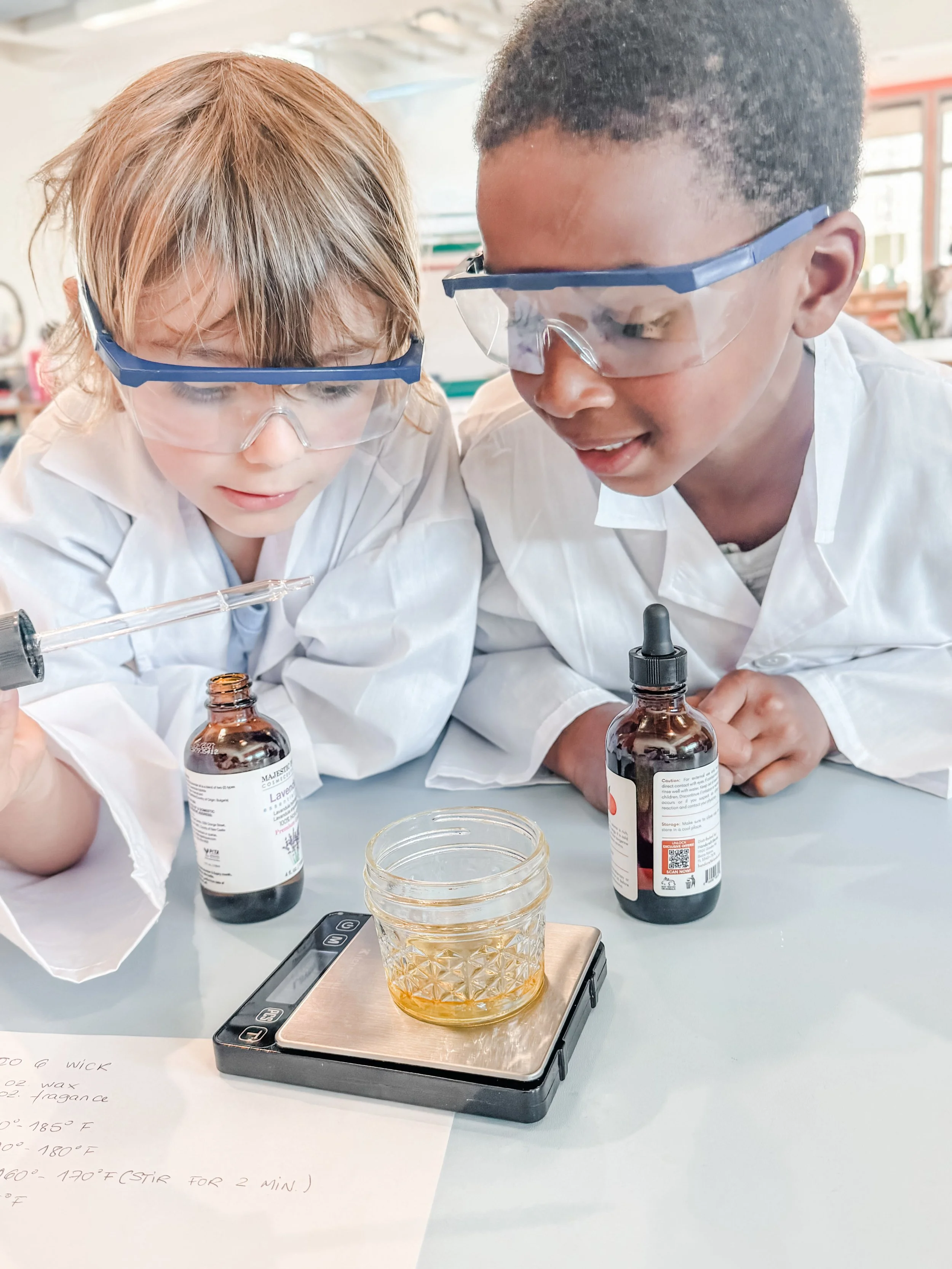
In the science lab, learners continued working on candle making. To make the experience even more exciting, we had an expert Zoom call with a real-life scientist from New Hampshire. He shared how important it is to respect the lab, take your time, and stay focused while working. Learners were fascinated as he described what he has to do before entering his lab, how he observes cells eating, and the careful steps required to create a final product. It was inspiring to hear about science happening in the real world.
Learners are also building independence as they work to complete tasks and earn badges. A new phrase has been heard throughout the Studio: “I’m badging!” Learners are proud of their progress and are looking forward to sharing their work during the upcoming conferences.
Looking ahead, the letter for the week of March 16–20 is “I.” You may have noticed that we started with the vowels. A fun game to play at home is “I Spy” with objects that start with the letter “I.”
lower elementary studio
From ancient civilizations to modern persuasion, learners have been exploring how ideas, systems, and responsibility shape the world around them. This week, we connected history, science, and communication as learners examined how past cultures solved problems and how their own ideas can influence others.
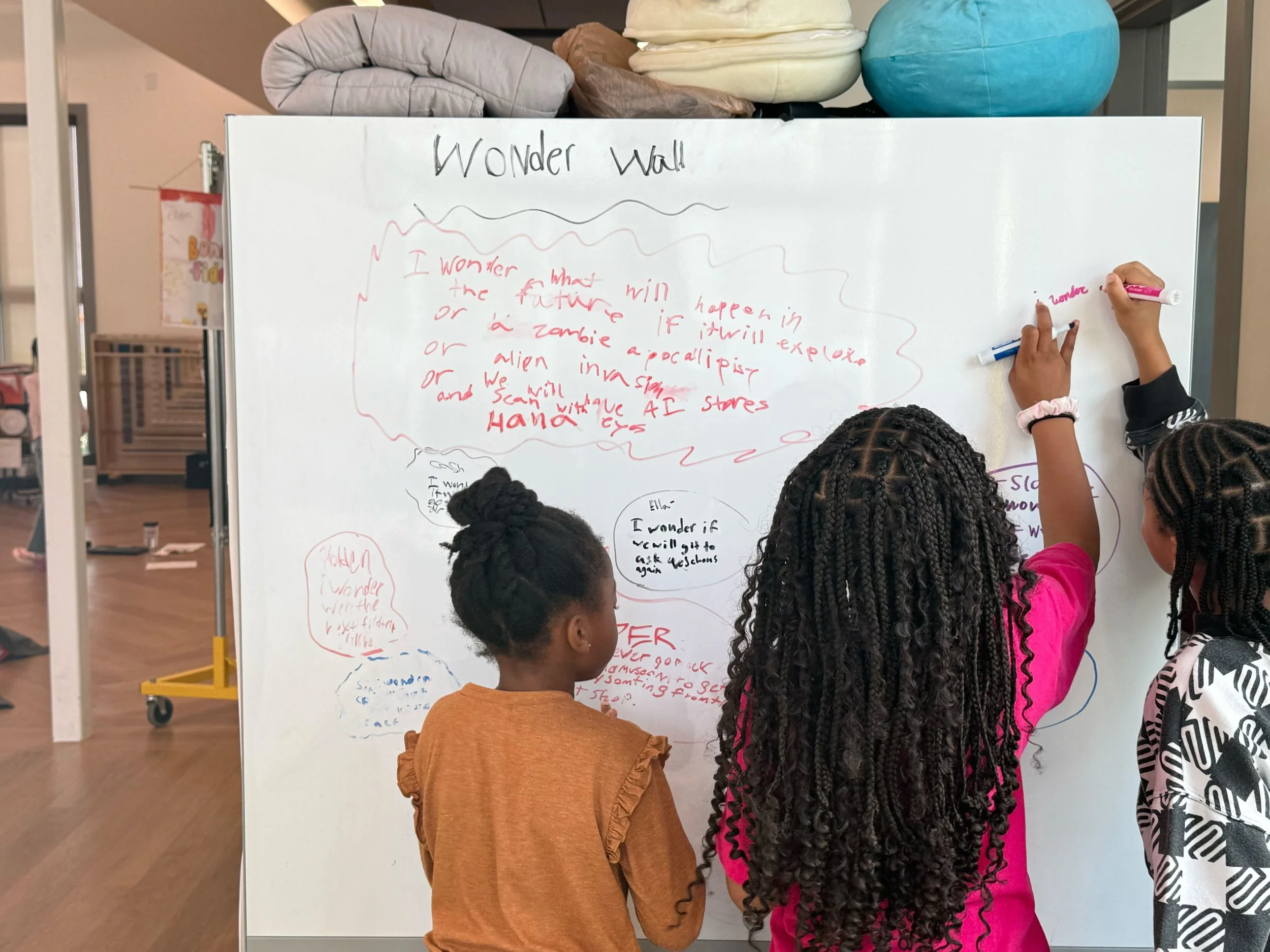
Civilization: All hands on deck! Heroes explored the Olmec civilization, often referred to as the “mother culture” of Mesoamerica. Learners studied the Olmecs’ famous colossal heads and had the option to create mini collapsible versions of these sculptures, as well as jade- and obsidian-inspired jewelry. After discovering how the Olmecs produced rubber, learners also had the opportunity to experiment with making their own rubber balls.
Quest: During Quest, learners put their taste buds to the test with a Poppi soda vs. handcrafted soda taste test, comparing commercially produced drinks with their own creations while studying carbonation and flavor balance. Learners also explored the science of solutions, suspensions, and colloids, using the Tyndall effect to observe how light scatters through different mixtures.
Story Arts: This week in Story Arts, learners stepped into the role of researchers and persuasive communicators. Heroes surveyed classmates, created bar graphs, and gathered testimonials to understand different perspectives within the Studio. They then analyzed their findings and used this real-world evidence to strengthen their persuasive pitches as they prepare for their upcoming Shark Tank-style presentations. As learners prepare their persuasive pitches, they are discovering that strong ideas become even more powerful when they are clearly communicated.
Other News: Several learners have expressed appreciation for the Strikes and Warning System. One learner shared, “I like that people have consequences for affecting the Studio,” while another commented, “It’s clear and easy to understand.” We have also swapped our Wednesday DEAR rotations with handwriting to intentionally provide time for each learner to strengthen their handwriting skills.
Question of the Week:
When you notice a problem or something that could be improved at school, at home, or in your community, what does taking full responsibility look like? What is one small step you could take instead of waiting for someone else to fix it?
We look forward to seeing how their research, creativity, and voice come together in their upcoming Story Arts presentations.
upper elementary studio
This week in the Upper Studio was full of building, experimenting, storytelling, and leadership. Learners continued work across Quest, Civilization, Story Arts, and Studio culture projects.
Quest: Building Sensory Instruments
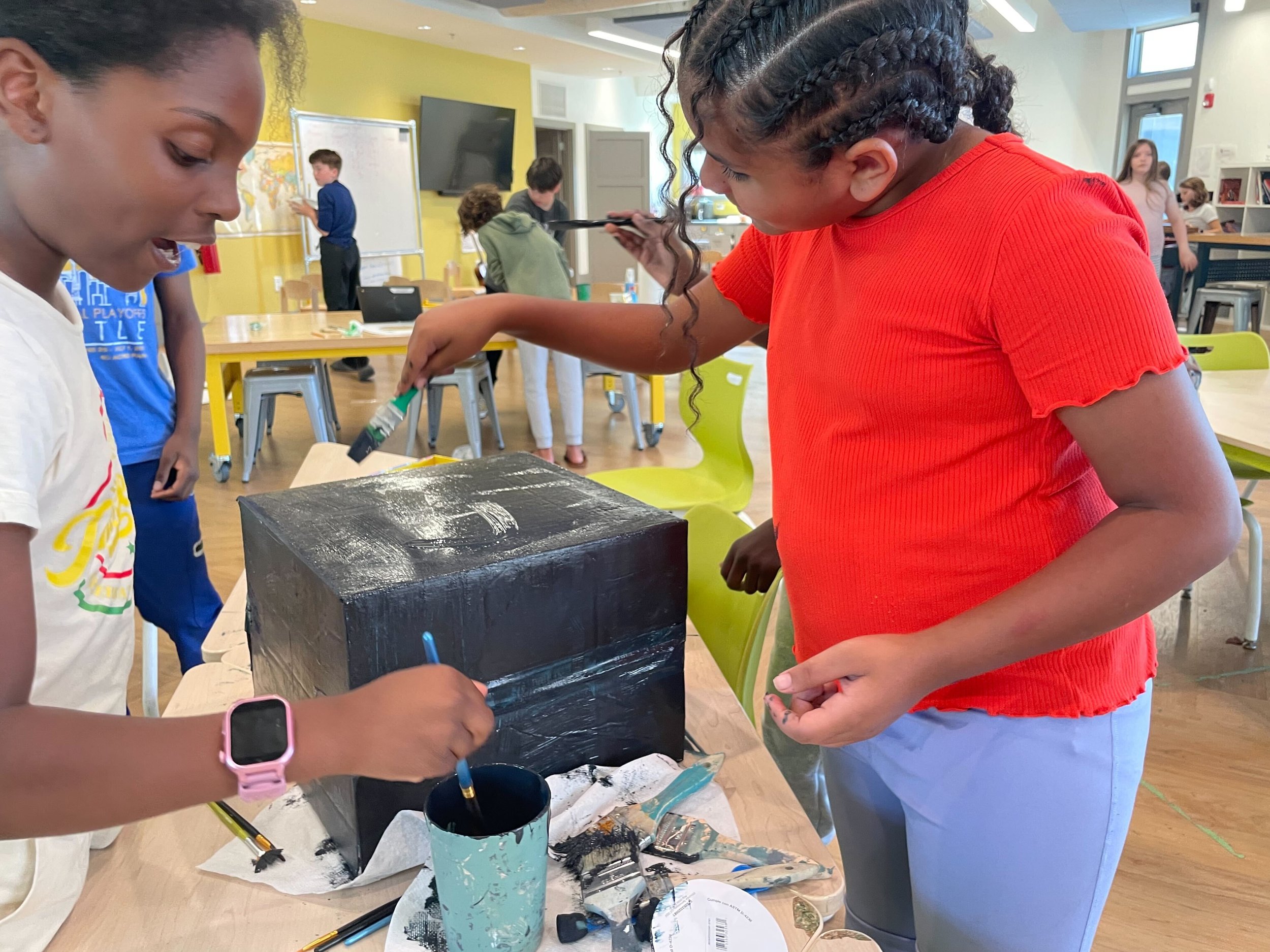
In Quest, learners continued designing and building their sensory instruments. These instruments are meant to help influence how the body responds to stress.
Earlier in the week, we learned about cortisol, a hormone the brain releases during the fight-or-flight response. Cortisol is extremely useful when we are in real danger, helping the body react quickly. However, when cortisol stays high in normal situations—like school or social stress—it can make the body feel tense and overwhelmed.
Learners are now exploring ways to help the body release what we’ve been calling “chill chemicals.” These include:
dopamine (motivation and reward)
endorphins (natural pain relief and positive feeling)
serotonin (mood stability)
acetylcholine (focus and calm attention)
Learners brainstormed ways that sound, vibration, rhythm, texture, and movement might help encourage these responses. They requested materials and began constructing instruments designed to stimulate the senses and help the body relax and refocus.
We’re excited to see the prototypes take shape in the coming weeks.
Civ: The Great Kingdoms of Medieval Africa
In Civilization this week, we began our study of Medieval Africa by exploring several major kingdoms of the period:
Aksum
Ghana
Mali
Songhai
Great Zimbabwe
The Swahili Coastal Cities
After a short overview, learners worked in groups of four. Each group was assigned one kingdom and had to think like the rulers of that civilization.
Their challenge was to decide what strategies a king might use to become powerful and wealthy. Each group made decisions about:
trade partners and resources
military strategy
alliances
infrastructure or cultural investments
Once groups locked in their choices, we compared their strategies to what those kingdoms actually did historically. The teams whose decisions were closest to the real historical strategies won the round.
This helped learners see how geography, trade routes, and political decisions shaped the success of civilizations. We also did a launch on one of the most legendary rulers of the era: Sundiata Keita, often called the “Lion King” of Mali. Learners heard the story of how Sundiata united smaller kingdoms into an alliance and defeated the Sosso ruler, creating the Mali Empire, one of the most powerful states in medieval West Africa.
Story Arts: Pixar’s Braintrust and the Power of Feedback
Story Arts this week focused on improving the learners’ original play. On Tuesday, learners learned about Pixar’s famous Braintrust process. At Pixar, early versions of stories are often messy or incomplete, but teams regularly come together to give honest, constructive feedback that helps transform rough ideas into great films.
We ran our own Studio Braintrust session. Different teams rotated through feedback rounds:
sound design teams gave feedback to props teams
props teams gave feedback to story teams
story teams shared suggestions for staging and pacing
The goal was not to criticize, but to help each group improve their work.
In Art, learners continued building the physical world of the play. They added more detail to painted backdrops and began constructing props, including:
a toaster
a coffee machine
a war table
a robot dragon
These builds are becoming increasingly elaborate and creative as the play moves closer to performance.
Guide-Free Day
On Thursday, beginning at 11:20 AM, the Studio experimented with a Guide-free day.
During this time, Mr. K and Mr. Hadrian stepped back and allowed the learners to run the Studio themselves. Guides observed quietly and took notes about how learners organized time, solved problems, and supported one another.
If the Studio demonstrates strong self-direction and leadership, the reward will be a rap battle between the Upper Studio Guides—a possibility that learners are taking very seriously.
Session 5 Demo Songs Are Complete
Finally, the Session 5 demo songs are finished!
Each song includes:
original lyrics
original melodies
backing tracks created by learners in Soundtrap
To match their melodies, Mr. Hadrian recorded backing guitar parts for the tracks.
You can listen to all of the songs here:
https://drive.google.com/drive/folders/1-zJxvQ51jKougTYMnqmoso38jqVNeSTA?usp=drive_link
The creativity and musicality in these projects has been impressive, and we’re excited to see how the learners continue to experiment with music and sound in future sessions.
Another strong week of building, storytelling, and experimentation in the Studio!
middle school studio
This week, learners continued stepping into meaningful, hands-on work across Quest, Story Arts, and Studio culture building.
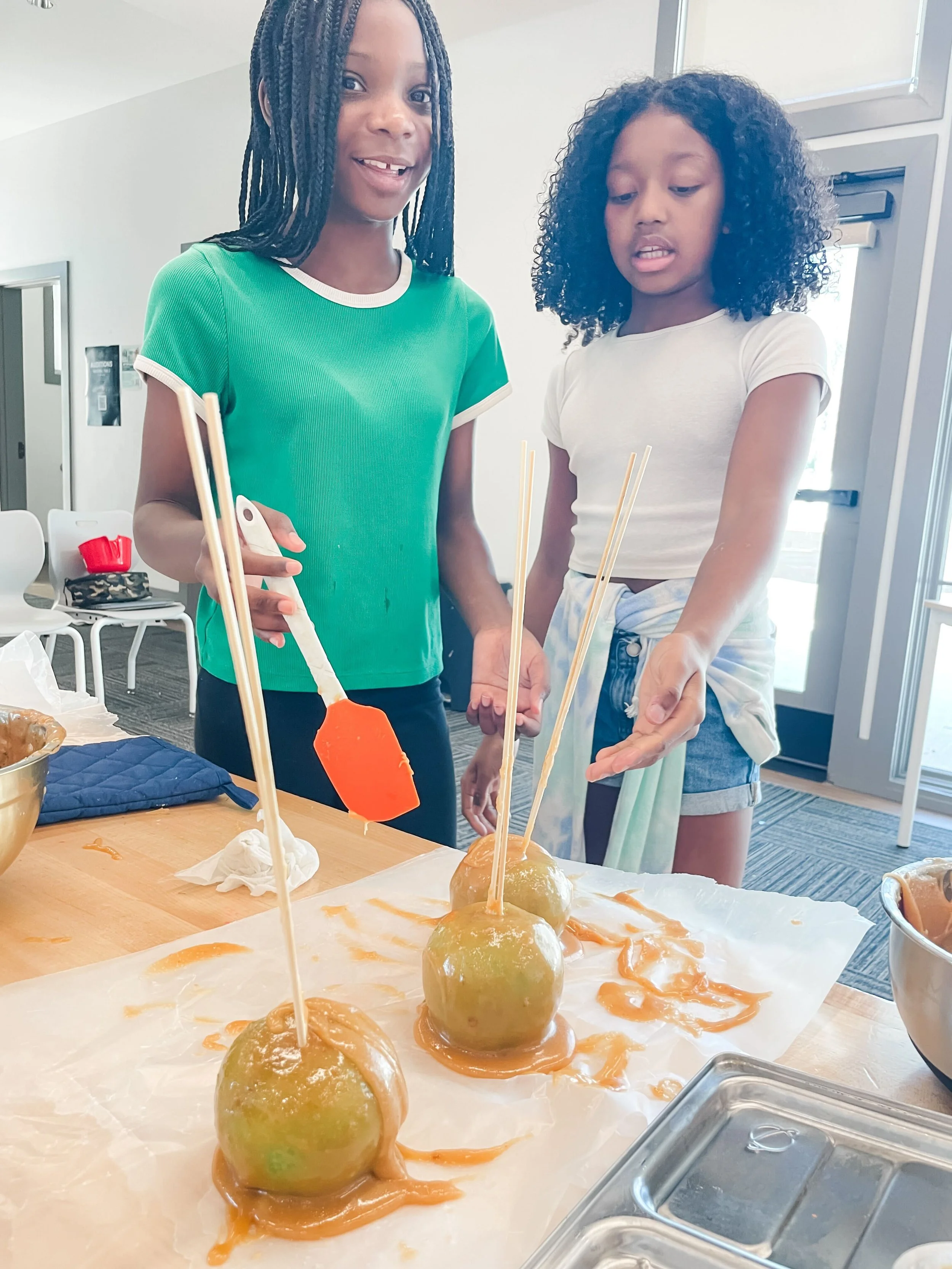
In Quest, learners completed their second round of candy experiments as they worked to improve caramel apples and saltwater taffy. This next round gave them the chance to build on what they learned from their first tests, make adjustments, and observe how small changes can affect texture, consistency, and overall results. Through experimentation, learners are practicing the kind of iteration real food scientists and product developers use as they refine products over time. When heroes weren’t experimenting in the Candy Lab, they were working on their “oral defense” for Exhibition to explain the chemistry, data, and reasoning behind their recommendations to our users.
In Story Arts, learners moved further into character development through 3D modeling. They began by using playdough to practice shaping and visualizing their characters in three dimensions. This gave them a tangible way to think about form, details, and design choices before moving into digital tools. Learners also analyzed different 3D modeling options using a recommended resource breakdown from a professional 3D modeler. After comparing tools and considering what would work best for their goals, each learner selected the platform they plan to use for their final product. This process invited both creativity and critical thinking as learners considered not just what they want to make, but also which tools will best help them bring their ideas to life.
Alongside their work, learners also engaged in an important conversation about self-governance. They reviewed different forms of self-governance used around the world and discussed how communities create systems to hold people accountable while also helping them grow. From there, learners brainstormed an alternative to the Studio’s current “strikes” system. Rather than simply accepting an existing structure that they created, they were invited to think critically about what makes a system fair, effective, and aligned with the kind of community they want to build together. The Studio will now trial this learner-generated alternative for two weeks and reflect on how it works in practice.
Altogether, this week reflected the kind of learning that matters most: experimenting, creating, analyzing, and taking ownership of community life. Whether testing candy recipes, designing original characters, or reimagining accountability systems, learners are practicing the habits of thoughtful creators and responsible citizens.
high school studio
The Biology of Hair Quest Begins
This week, our learners launched our newest Quest: The World & Biology of Hair, and it is already proving to be an exciting blend of science, creativity, and real-world problem solving.
For this Quest, our heroes are working with a real-world user: a beautician and licensed cosmetologist who works with a wide range of clients. During our initial conversations with her, she shared a challenge she encounters every day in her work. No matter the race, gender, or age of her clients, many of them struggle with persistent hair dryness. Even after trying different treatments, oils, conditioners, and styling products, dryness often returns and remains difficult to manage.
This real problem has become the driving question for our Quest:
How might we create a hair product that truly works in the real world—one that helps combat dryness for all hair types?
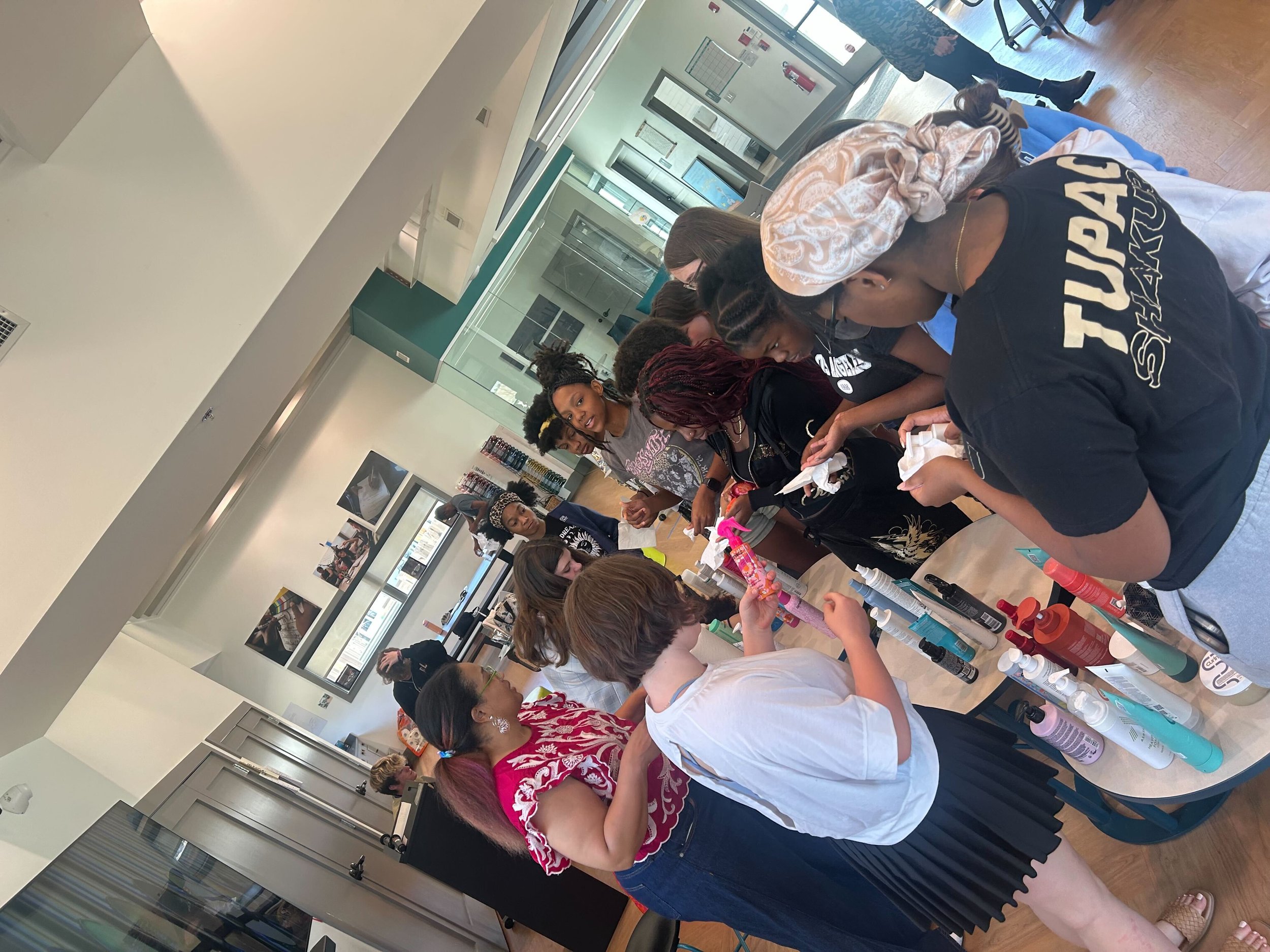
Over the next several weeks, our heroes will step into the roles of scientists, product designers, and entrepreneurs as they investigate the biology and chemistry behind hair. Learners will study how hair is structured, what causes dryness, how moisture is retained or lost, and how different ingredients interact with hair at a biological level.
Using this knowledge, teams will work to design and develop a new product aimed at solving our user’s challenge. But the work doesn’t stop there. In true entrepreneurial fashion, learners will also build the full concept around their product, including:
developing the product itself (such as a gel, cream, or foam designed to combat dryness)
creating a brand identity and story behind the product
producing a commercial to showcase how the product works
designing marketing strategies that explain how the product would reach real customers
At Exhibition, heroes will present their solutions and demonstrate how their product could help solve the problem our user faces with her clients.
It’s exciting to watch learners connect science to something they see in everyday life while also thinking like innovators and business creators.
Parent Conferences Coming Up
Parent conferences are right around the corner. These meetings are an important opportunity to discuss your hero’s progress, celebrate growth, and talk about goals for the remainder of the year.
If you have not already done so, please be sure to sign up for a conference slot for your hero. We look forward to connecting with each of you and sharing more about the learning happening in the Studio.