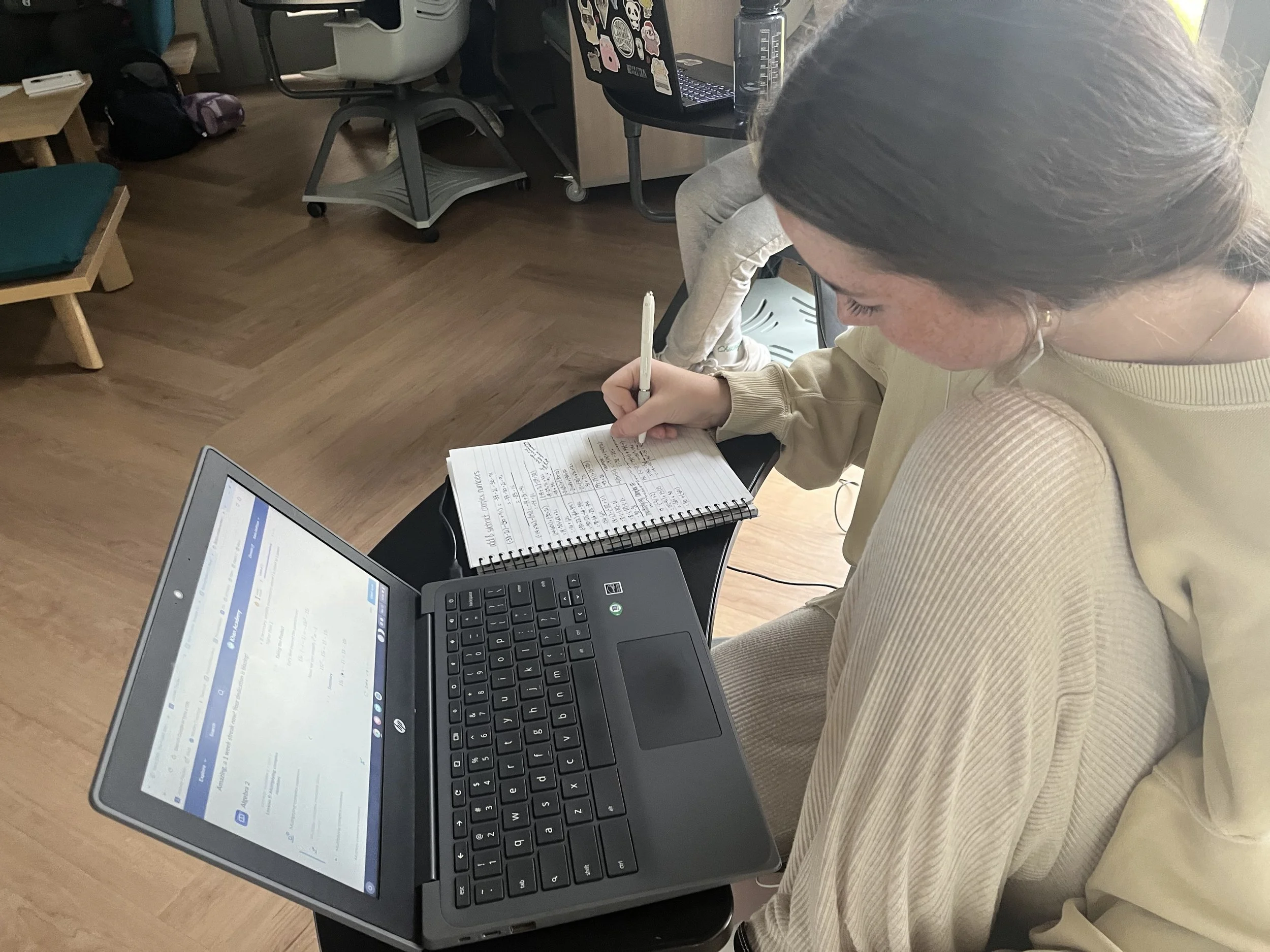
Rigor Without Burnout: Our Approach to High School Learning
By Dr. Tyler Thigpen, Head of School
Two different high school parents raised questions about rigor with me this week. I’m grateful for that. When families say, “I’m worried—are we doing enough?” that’s not criticism to dodge; it’s a trust to honor.
Our high school is intentionally living in the middle of three real tensions: being a place where teens can flourish without being crushed by the very real mental health crisis around them; preparing most for colleges that, while still a crucial gateway for many, often fall short of workforce expectations; and equipping them for life and work beyond school, where judgment, adaptability, self-direction, and character matter far more than transcripts and test scores.
This article is my attempt to answer the core question: is our high school rigorous enough—both for college in the short term and life in the long term—while still attending carefully to our heroes’ mental health and being a genuinely joyful place of learning?
What most of us think “rigor” means
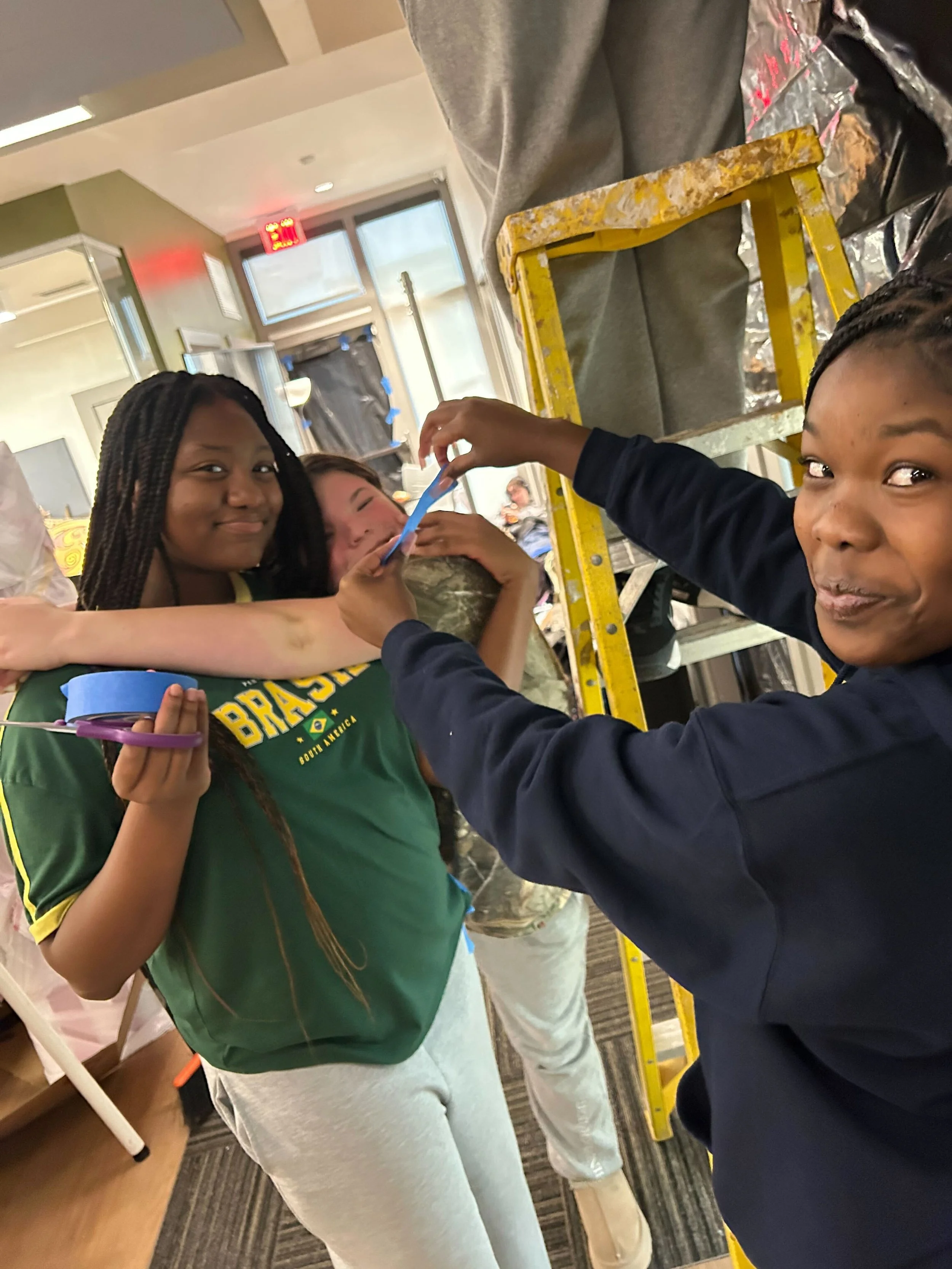
Many of us grew up with rigor defined as heavy nightly homework, dense lectures, stacked APs, constant tests, and fragile GPAs. If you were stressed and your backpack was overflowing, that counted as “rigorous.”
But nationally, that version hasn’t delivered. One survey found 89% of high school principals say their students are “ready for college,” while only 26% of college professors agree. Another found 96% of college academic deans think their grads are “workforce ready,” and only 11% of employers do.
Let that sink in.
We have lots of hoop-jumping, but not enough real readiness.
At Forest, we’re aiming for something different: rigor as real-world thinking plus real responsibility—without sacrificing mental health and college readiness. And we have hard data that this is working.
What the CCRA+ tells us
Every year, our middle and high schoolers take the College and Career Readiness Assessment Plus (CCRA+), which measures quantitative reasoning, analytical thinking, writing persuasiveness, and writing mechanics. In other words, the exact skills college professors and employers say they can’t find enough of.
Over the past few years:
91% of our 12th graders scored Proficient or above, compared to 71% nationally, with an average performance at the Accomplished level.
50% of our 10th graders scored Proficient or above, versus 31% nationally.
In 2023–24, 94% of returning middle schoolers improved their CCRA+ scores.
Historically, 100% of high schoolers who’ve been with us for two or three years have improved year over year.
That tells us Forest heroes aren’t just busy—they are growing in the higher-order skills that matter most.
For college-bound heroes: 6 clear ways to show rigor
Parents of college-bound learners often ask, “How will colleges see rigor on my child’s record?” Forest heroes can show rigor in seven concrete ways:
Mastery credits: Earn the maximum 30 mastery credits and aim to exceed peers (only one hero has reached 30 so far).
Learner Design courses: Design as many independent-study courses as possible.
Apprenticeships: Max out apprenticeships (28 badges total, or 7 per year instead of the usual 4).
Dual enrollment: Take up to 3 dual-enrollment courses.
AP courses: Take up to 4 AP courses.
Badges: Consistently max out badges earned each year.
On their Mastery Transcript, seniors should spotlight their strongest Quests, Apprenticeships, extracurriculars, and Story Arts work so colleges can clearly see their best thinking, real-world impact, and readiness for college-level work.
Will my child actually be ready for college classes?
Beneath almost every rigor question is this: “Will my teenager be able to handle real college coursework soon—not just thrive in their 20s?” By graduation, Forest high schoolers will have:
Written and revised substantial analytical essays
Completed college-level reading loads
Taken math through the level that fits their goals (up to BC Calculus)
Practiced lab-style scientific thinking
Sat for traditional timed exams at Forest (for practice) and through dual enrollment, AP, SAT, and/or ACT (if they choose to).
Our CCRA+ results confirm they’re already performing above national averages in the kinds of reading, writing, and reasoning that college demands.
What rigor looks like in the work itself
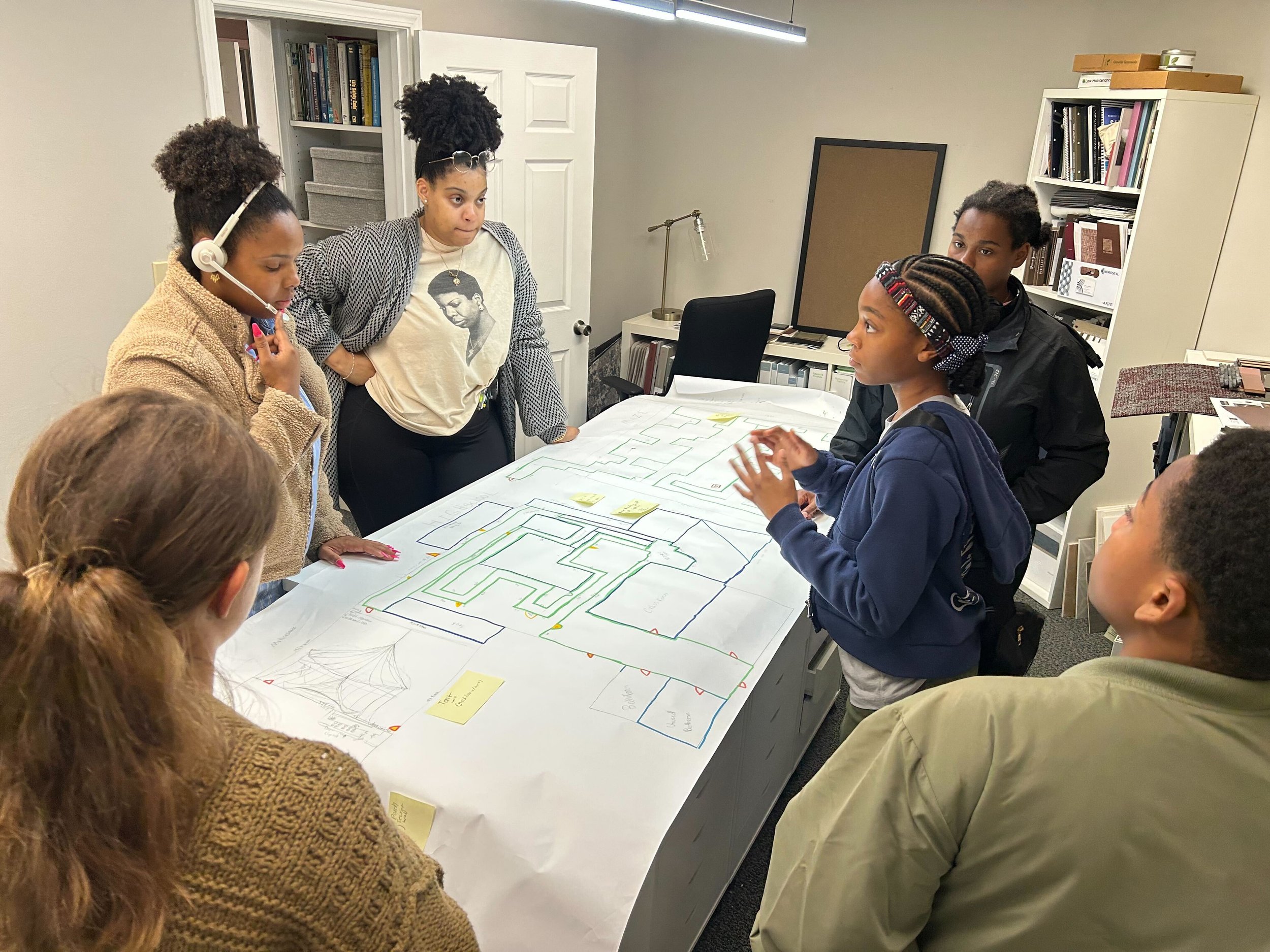
Day to day, rigor shows up in the work heroes are asked to do. For example, high schoolers analyze profitability and climate data to recommend locations for a new theme park. They design economic models for the internet that balance AI’s benefits with fair pay for human creators. They build AI tools to tackle meeting productivity. They debate town design questions like housing density, enforced diversity, and car-free streets. They weigh competing geological evidence in the dinosaur extinction debate. They do complex work where they have to apply math, science, history, and English to tackle real issues.
They also launch businesses and nonprofits, draft patent applications, build electric vehicles, produce films, write books, and apprentice with professionals. In Genius Hours, they choose challenging problems, plan their own approach, and present to peers. That combination of autonomy, complexity, and public accountability is not easy—but it is exactly the kind of rigor that builds judgment.
Mastery, accreditation, and outcomes
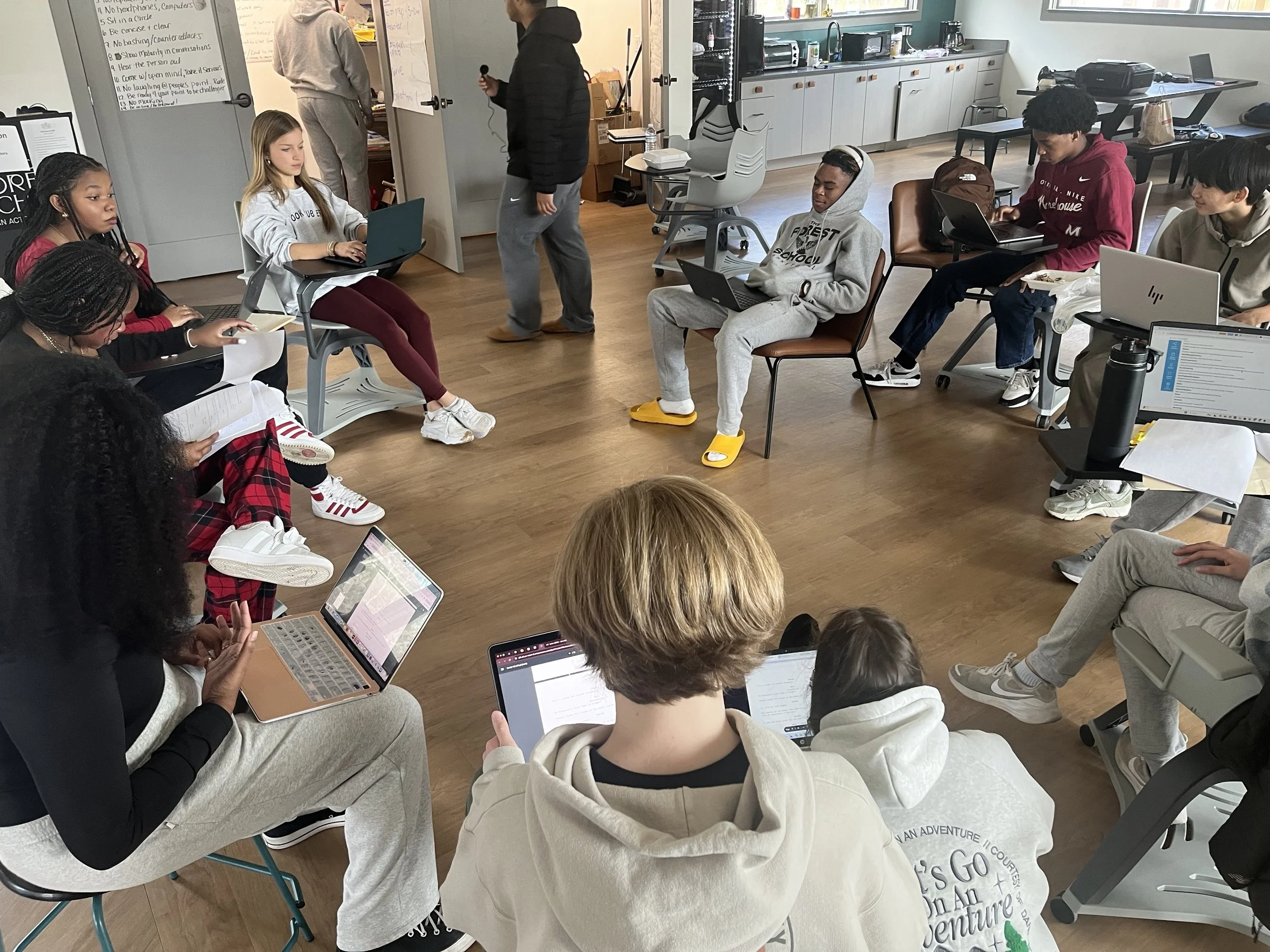
We don’t give credit for seat time. We use a mastery-based system and Mastery Transcript. A credit is earned by producing evidence of mastery through projects, Practicals, Exhibitions, portfolios, and defenses. Externally, our high school is accredited at the highest quality level by the Georgia Accrediting Commission (GAC). The Forest School Online also holds national WASC accreditation. Since we opened, every Forest graduate who has applied to college has been accepted—at places like Georgia Tech, West Point, UGA, Bates, Morehouse, Howard, and others.
Those are not the outcomes of a “soft” program.
What our graduates say—and where we’re still growing
Alumni tell us Forest helped them:
Stand out in college and work because they can think independently and manage projects
Bounce back from failure with resilience
Manage their own time and work without constant oversight
Speak confidently with adults and present in front of groups
See more than one path after high school (gap years, nontraditional choices)
They also name some clear areas for growth: a stronger math and history foundation for every grad (not just those who naturally love those subjects), more direct teaching of test-taking and study skills, and tighter day-to-day discipline so it’s harder to coast or quietly opt out of work. In response, we’ve added a weekly one-hour Math Lab for algebra, trig, and geometry (beginning December 2025), launched lessons on study skills and incorporated more test practice, and continued enforcing a system in which learners who are behind for two sessions must catch up in the third or they exit the school—a structure that has been in place for years and has already led to multiple exits when promises weren’t met.
In other words, Forest is already delivering deep, meaningful rigor, and we’re intentionally sharpening the traditional academic pieces you care about so your child is even better prepared for college and beyond.
The bottom line
When I look at our CCRA+ data, accreditation, college outcomes, daily work, apprenticeships, Genius Hours, and alumni stories, I see a high school where learners are growing in the kinds of thinking college and life actually demand. They’re applying learning to real problems, not just worksheets. They’re building judgment, resilience, and responsibility—not just chasing grades.
That is the kind of rigor we are committed to at Forest: rigorous enough for college, and meaningful enough for a life that matters.